#MobileNews.ng
  • Home
  • Conservation
  • News
  • Job Vacancy
  • Climate Change
  • Development
  • Culture
  • Economy

Sunday, 8 January 2017

MMM to return in grand style with bitocoin


If all go as said, Participants in the MMM will now attract more returns on their investment and also operate comfortably,with the introduction of bitocoin.
MMM Nigeria, popular Ponzi scheme,  introduced bitcoin, seen as the world’s best performing currency, as part of its mode of payment in its comeback plans.
Prior to the freeze of MMM, participants were allowed to provide help in bitcoin, but they were paid back in naira.
However, the new plan allows participants to receive payment in bitcoin, and watch their monies grow in bitcoin.
In a statement to participants, MMM said “due to the recent sharp price fluctuations of Bitcoin, MAVRO-BTC is being introduced in the system.
“So far, we have only had Mavro-Naira in the system. Even though you provided help via Bitcoin, your Bitcoins, anyway, were recalculated into the Naira at the exchange rate at the moment of providing help, and you were credited with Mavro-Naira in your PO.
“It was the naira amount that grew. In other words, you received 30 percent a month specifically in naira (not in Bitcoins, although you originally provided help using Bitcoins).

“Now, you have a chance to have 30 percent growth of the Bitcoin amount, not the naira amount. So, acquire MAVRO-BTC which will be credited in your PO and will grow at a 30 percent monthly growth rate.

“In a month not only 30 percent will be added to your initial amount, but, it can increase itself due to Bitcoin price growth.
“And, what if Bitcoin price is going to fall? In case Bitcoin price might go down, you will be able to return to naira at any time — instantly convert your MAVRO-BTC into Mavro-Naira (and vice versa, if Bitcoin price might increase again).
“This option is available in PO. You can convert both confirmed and unconfirmed Mavro.

“We hope that with implementing MAVRO-BTC, your participation in MMM will become more comfortable!”

The Ponzi scheme, which froze accounts of participants on December 13, 2016, is preparing to return, and it is throwing up a number of plans to get its community active again.
Bitcoin, the increasingly popular cryptocurrency or digital currency, was the best performing currency in 2016, appreciating by more than 100 percent in 2016, from about $400 per bitcoin to over $1,000 per bitcoin.

****Partly from The Sun
Posted by Innocent Onoh at 23:53 No comments:
Email ThisBlogThis!Share to XShare to FacebookShare to Pinterest

EnviroNews launches mobile app

Lovers of rich environment news about Nigeria and indeed globally, will no longer bother to get them.


The mobile app bears the EnviroNews brief logo
This is because a leading online environment and development magazine, EnviroNews Nigeria, has launched an Android version of its mobile app.

The mobile app makes it easy and convenient for its readers across the world to access the medium’s multimedia news and stories via their smartphones.


Commenting on the development, Publisher/ Editor, Mr. Michael Simire, said: “This is a vital first step forward in our determination to ensure a personalised digital experience. Just as we have it on the conventional site, the categories and focus areas are clearly indicated and easily accessible. Some of these are: Agric & Biotech, Cover, Climate Change, Human Settlement, Marine, Water & Sanitation, Sustainable Development, TV Reports, and Science & Tech.
“Our readers and visitors are central to how we develop these services, and their feedback has been important in the creation of the mobile app. Technological innovation is key in the development of the industry and, as a leading online environment and development magazine, the desire is to be able to provide a platform that makes reading pleasurable for everyone.”
The new app is available as “EnviroNews” via the Google Play Store and is free to download.
According to Simire, the IOS version of the mobile app will follow shortly.
Posted by Innocent Onoh at 23:13 No comments:
Email ThisBlogThis!Share to XShare to FacebookShare to Pinterest

Ebola Virus in lungs!!!

Ebola virus found hiding in lungs of health-care worker


Ebola has proven itself a tricky foe to get rid of in the human body. In numerous cases in which it was thought to be gone and patients fully recovered, the virus has been found in the eyes, semen, amniotic fluid, placenta, breast milk and central nervous system.
A victim of Ebola virus
Now a paper published in the journal PLOS Pathogens describes another possible hiding place for the virus: the lungs.
The case study involves a health-care worker who was infected in Sierra Leone and moved to a hospital in Rome for treatment. Doctors were surprised that after the virus had been cleared from the patient’s blood plasma, it could still be found in the lower respiratory tract.
Study author Giuseppe Ippolito of Italy’s National Institute for Infectious Disease said that previous studies in the lab, in animals and in patients have suggested that Ebola might cause lung damage because of replicating virus in the lungs, but that there had been no direct evidence of lung infection until now.
The paper notes that researchers found viral RNA and viral replication markers in the lungs for five days after Ebola was cleared from the blood and that the patient “developed significant lung injury.”
“This suggests a major role of the respiratory tissues in the pathogenesis of Ebola virus disease,” Ippolito and his colleagues wrote.
These findings are significant because, if confirmed, they suggest that new ways of monitoring survivors may be needed as well as possible new treatments.
By Ariana Eunjung Cha, The Washington Post

*** From ENvironews
Posted by Innocent Onoh at 23:00 No comments:
Email ThisBlogThis!Share to XShare to FacebookShare to Pinterest

Groups demand protection of forest harbouring endangered Asian elephant species

A call has gone to the international conservation community to protect the Sepintun forest, a haven for Sumatran elephants, which are critically endangered as their forest home is being destroyed.

Sumatran elephants
Some of the last Sumatran elephants are said to roam the forest of Sepintun – a habitat that is being trashed for oil palm, pulp and rubber plantations, and one which conservationists insist urgently needs to be protected from the threat of industrial plantations.
The Sumatran elephant (or Elephas maximus sumatrensis) is one of three recognised subspecies of the Asian elephant, and native to the Indonesia island of Sumatra. It is a sub-species of the Asian elephant which includes the Indian elephant, the Sumatran elephant, the Sri-Lanka elephant and the Borneo elephant.
The Sumatran elephant is now said to be extremely rare, with estimates in 2,000 putting Sumatran elephant numbers at just over 2,000 individuals. However, the Sumatran elephant population has severely declined as they have reportedly lost more than 80% of their natural habitat to deforestation for palm oil plantations.
Reinhard Behrend of Rainforest Rescue says: “The owners of the plantations on their former habitat consider the elephants to be vermin. Yet there are still forests where the elephants can live: one of them is the forest of Sepintun in Jambi province. This last fragment of primary forest is home to a small herd of female elephants and their calves. They still follow their ancient trails, many of which now lead through plantations.
“While the elephants themselves are protected, companies and authorities are denying that they exist and want to clear their forest for a plantation. That would spell the end of the critically endangered herd.”
Feri Irawan of Marhoni states: “No more than 150 elephants currently live in all of Jambi province. They are critically endangered by the oil palm, pulp and rubber plantations and coal mines that are eating away at their habitat. All but 1,500 hectares of Sepintun’s forests are gone.
“However, as far as companies and the authorities are concerned, the elephants do not exist: Only by denying that elephants still live in the region will they be able to clear the forest of Sepintun for plantations.”


*** From Environews
Posted by Innocent Onoh at 22:58 No comments:
Email ThisBlogThis!Share to XShare to FacebookShare to Pinterest

Thursday, 5 January 2017

2016 confirmed hottest year on record


The first global analysis of the whole of 2016 has confirmed last year as the warmest on record and saw the planet near a 1.5°C warming, according to the Copernicus Climate Change Service (C3S).
Annual global air temperature at a height of two metres (left axis) and estimated change from the beginning of the industrial era (right axis). Sources: Copernicus Climate Change Service, ECMWF, for data from 1979; Met Office Hadley Centre, NASA and NOAA for blended data prior to 1979.
(Credit: ECMWF, Copernicus Climate Change Service)
The latest figures from C3S, part of the EU’s Copernicus earth observation programme, show that 2016’s global temperature exceeded 14.8°C, and was around 1.3°C higher than typical for the middle years of the 18th century. 2016 was close to 0.2°C warmer than 2015, which was previously the warmest year on record.
Countries agreed in Paris in 2015 to holding the increase in the global average temperature to well below 2 °C above pre-industrial levels and to pursue efforts to limit the temperature increase to 1.5 °C above pre-industrial levels, recognising that this would significantly reduce the risks and impacts of climate change.

A more dangerous climate
Global warming increases the likelihood of extreme weather events such as heatwaves, droughts and floods. Future warming could cause billions of euros of damage each year and affect the availability of fresh water and crop yields in the most vulnerable countries.
Air temperature at a height of two metres for 2016, shown relative to its 1981-2010 average. Source: Copernicus Climate Change Service, ECMWF. (Credit: ECMWF, Copernicus Climate Change Service)
Director of ECMWF’s Copernicus Services, Juan Garcés de Marcilla, said: “We are already seeing around the globe the impacts of a changing climate. Land and sea temperatures are rising along with sea-levels, while the world’s sea-ice extent, glacier volume and snow cover are decreasing; rainfall patterns are changing and climate-related extremes such as heatwaves, floods and droughts are increasing in frequency and intensity for many regions. The future impact of climate change will depend on the effort we make now, in part achieved by better sharing of climate knowledge and information.
“To help decision-makers develop effective adaptation and mitigation solutions we make the data from Copernicus Climate Change Service (C3S) and the Copernicus Atmosphere Monitoring Service (CAMS) freely and openly available. By mainstreaming the information that the Copernicus Services hold into climate policy and strategy, governments, the private sector and society can identify and unite around opportunities to tackle further climate change and reduce vulnerability where its effects are unavoidable.”
C3S found that global temperatures in February 2016 already touched the 1.5°C limit, though under the influence of a strong El Niño, an intermittent event involving a period of warming. Global temperatures still remained well above average in the second half of 2016, associated partly with exceptionally low sea-ice cover in both the Arctic and Antarctic.
C3S found that most regions around the world experienced above-average temperatures during 2016. The largest differences in regional average temperatures were found in the Arctic but conditions were also extreme over southern Africa early in the year, over southern and south-eastern Asia prior to the summer monsoon, over the Middle East later in summer, and over parts of North America in summer and autumn.
In addition to record temperatures, ECMWF’s Copernicus Services monitored other extremes occurring in 2016, including significant global wildfires and the growth of CO2 in the atmosphere. Destructive fires were observed around Fort McMurray, Canada in May and then extensive wildfires across Siberia, associated with the year’s high surface temperatures, during June and July.
For the first year CO2 levels did not return below 400 ppm as summer turned to autumn in the Northern Hemisphere. In previous years, take-up of CO2 by vegetation during the summer growing season has typically seen September mark the lowest point for CO2 levels.
Copernicus temperature data are based on millions of diverse daily measurements analysed by the European Centre for Medium-Range Weather Forecasts (ECMWF) using methods developed for weather forecasting.
Annual global temperature variations derived from Copernicus data and from other widely used sets of data typically agree to better than 0.1°C for recent years. The spread in values is likely to be larger than 0.1°C for 2016 due to differences in the extent to which datasets represent the warm conditions associated with exceptionally low sea-ice cover.
The estimate used here is that the climatological average temperature around the start of the Industrial Revolution is estimated to have been 0.7°C lower than that for 1981-2010.
Copernicus is the European Commission’s flagship earth observation programme that delivers freely accessible operational data and information services. It provides users with reliable and up-to-date information through a set of services related to environmental and security issues.
C3S is run by ECMWF on behalf of the European Commission. ECMWF is an independent intergovernmental organisation, producing and disseminating numerical weather predictions to its 34 member and co-operating states.

**** From Environews
Posted by Innocent Onoh at 21:20 No comments:
Email ThisBlogThis!Share to XShare to FacebookShare to Pinterest

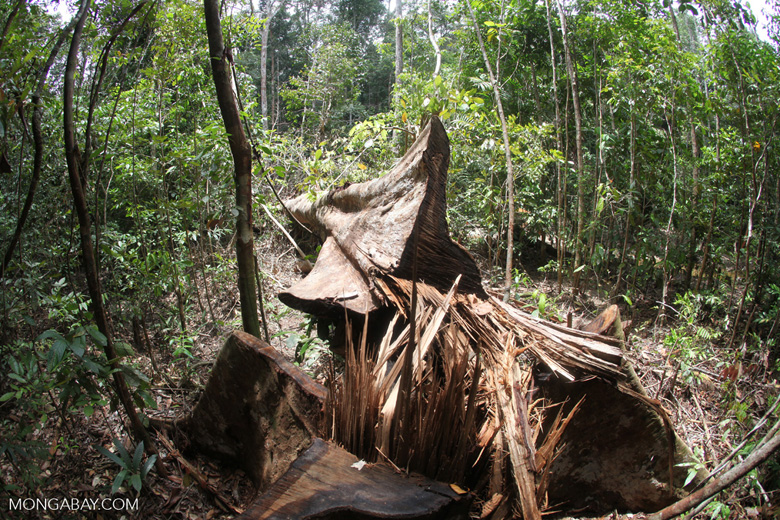
Illegal logging shows little sign of slowing--New Report

A report recently released presents the most comprehensive scientific analysis of illegal logging ever published.
 Its findings indicate a third of the tropical timber traded globally comes from illegal deforestation, and that regulation loopholes along with an uptick in organized criminal networks are bolstering the illicit activity.
The report, titled “Illegal Logging and Related Timber Trade – Dimensions, Drivers, Impacts and Responses” was produced by more than 40 scientists around the world, and was coordinated by the International Union of Forest Research Organizations (IUFRO) in association with the Collaborative Partnership on Forests (CPF).
“Forestry crime including corporate crimes and illegal logging account for up to $152 billion every year, more than all official development aid combined,” said Erik Solheim, Head of UN Environment, one of the partner organizations supporting the assessment.
It finds that bilateral trade agreements between producer and consumer countries – e.g., the European Union’s Forest Law Enforcement, Governance and Trade Action Plan (FLEGT) that requires timber products imported into the EU be legally harvested – have prompted shifts in the timber trade to less restrictive domestic markets. The researchers also found jumps in exports to India and China, which have less stringent regulations and are now the biggest importers of both legal and illegal tropical wood.
The report states illegal logging present in all tropical nations, but highlights Brazil, Indonesia, and Malaysia as the world’s dominant timber producer countries. Indonesia tops the list, generating around 65 million cubic meters of wood-based products in 2013, around 60 percent of which are estimated to have come from illegally harvested timber.
The Democratic Republic of the Congo (DRC) tops the list of countries with the largest proportions of illicit timber, with more than 90 percent of its production illegally sourced. The report draws on research that pegs Cambodia at 90 percent illegal production; Bolivia, Peru, and Laos come in at around 80 percent each.

An illegally logged tree in Kalimantan, Indonesia. Photo by Rhett A. Butler

In terms of non-tropical timber, Russia now appears to be the main source of boreal and temperate wood. The researchers estimate around 20 percent of Russia’s timber products come from illegal logging, and that 96 percent of its hardwood is exported to China where it is manufactured into flooring, furniture, and other products. These are sold domestically as well as to markets in Europe, Japan, and the U.S.
Research discussed in the report indicates around 30 percent of the world’s timber is coming from illegal forest conversion, which is being done primarily for agricultural purposes like palm oil, beef, and soy production. Termed “conversion timber,” illegally soured wood from forest clearing has risen in recent years, according to the report.
The report highlights organized crime and insecure land rights as big contributors to illegal logging activities around the world. It draws on research that shows illegally extracted natural resources, such as timber, were used to buy weapons during war and conflict in western Africa – namely the DRC, Liberia, and Sierra Leone. In the DRC, ongoing conflict in the eastern part of the country is still funded in part through exploitation of natural resources.
Land tenure issues are “profound drivers” of illegal logging, according to the report. It finds that despite around 86 percent of the world’s forests being publicly owned, only around 60 percent are managed by the communities that reside in them. And less than a fifth have land rights that are officially recognized.
Previous analyses found that land held and managed by local and indigenous communities tend to be significantly less affected by deforestation than even government-managed areas.

**
Posted by Innocent Onoh at 20:44 No comments:
Email ThisBlogThis!Share to XShare to FacebookShare to Pinterest

China to ban its elephant ivory trade within a year

The Chinese government has announced that it will close its domestic commercial ivory market by the end of 2017, a move conservation groups are calling a “game-changer” for elephants, which are being rapidly driven toward extinction due to ivory poaching.
“This is great news that will shut down the world’s largest market for elephant ivory,” said Aili Kang, Wildlife Conservation Society (WCS) Asia Executive Director, in a statement. “[This] will help ensure that elephants have a fighting chance to beat extinction.”
“This is a game changer for Africa’s elephants.”
Carter Roberts, President and CEO of World Wildlife Fund (WWF), added: “The large-scale trade of ivory now faces its twilight years, and the future is brighter for wild elephants. With the US also ending its domestic ivory trade earlier this year, two of the largest ivory markets have taken action that will reverberate around the world.”
China’s General Office of the State Council on Friday laid out a timeline for implementing the ban. By March 31, 2017, commercial processing and sale of ivory will be stopped. By the end of 2017, all trade will be barred. The government will step up law enforcement with the intent of curbing smuggling and illegal sales of ivory. China will also launch a public education and outreach campaign to “raise ecological civilization awareness, to guide the public to refuse to buy any ivory and ivory products, and to develop a good social environment to protect elephants and other wildlife,” according to a statement from the government.
Asian elephant in Sri Lanka. Asian elephant populations are declining less rapidly than African elephant populations. Photo by Rhett A. Butler.
Momentum has been building for such action. Earlier this year the United States enacted a law to close its ivory market and both the IUCN and member states at CITES COP17 passed resolutions to close domestic elephant ivory markets. China and Hong Kong have also taken steps to regulate and reduce the elephant ivory trade, including China’s pledge in 2015 to eventually shutter its ivory market and Hong Kong’s statement last week that it would end the ivory trade by 2021.
The news comes as elephant populations are plunging across Africa. A recent survey conducted over two years by the Great Elephant Census found that Africa’s savanna elephant population declined by 144,000 since 2007, equivalent to an population decline of eight percent per year. An earlier study reported that African forest elephant populations declined by 60 percent in just a decade.

***From mongabay
Posted by Innocent Onoh at 20:34 No comments:
Email ThisBlogThis!Share to XShare to FacebookShare to Pinterest
Labels: Climate Change, Conservation, Culture, Development, News
Newer Posts Older Posts Home
Subscribe to: Posts (Atom)

Blog Archive

  • ▼  2019 (3)
    • ▼  June (3)
      • Lagos Swears-in Female SSG
      • Lagos Assembly holds valedictory session
      • World Environment Day reinforces commitment toward...
  • ►  2017 (36)
    • ►  February (1)
    • ►  January (35)
  • ►  2016 (517)
    • ►  December (4)
    • ►  October (19)
    • ►  September (100)
    • ►  August (154)
    • ►  July (197)
    • ►  June (43)
Picture Window theme. Theme images by merrymoonmary. Powered by Blogger.