Thursday, 5 January 2017

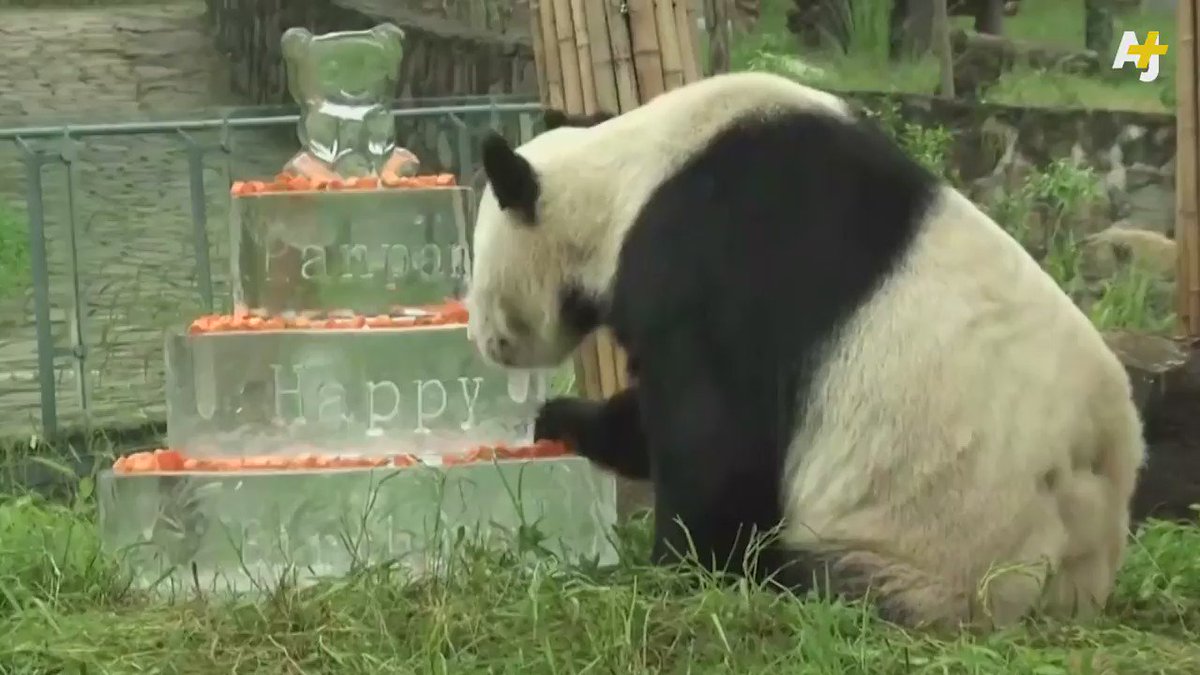
Grandpa’ Pan Pan, world’s oldest male giant panda, dies in China

The world lost yet another celebrity in 2016.
On 28 December 2016, Pan Pan, believed to be the world’s oldest male giant panda, died aged 31 at the Dujiangyan base of the China Conservation and Research Center for Giant Panda in Sichuan Province.
Pan Pan was an icon among giant pandas. These animals are notoriously difficult to breed in captivity, but Pan Pan sired over 130 children and grandchildren over his lifetime. His descendants account for more than 25 percent of all captive pandas that survive in the world today.
Pan Pan was diagnosed with cancer in June 2016. However, an autopsy is being carried out to confirm the cause of his death, according to Chinese media.
“Pan Pan was the equivalent to about 100 human years, but he had been living with cancer and his health had deteriorated in the past three days,” Tan Chengbin, a keeper with the Conservation and Research Center, told Xinhua. “He had lost consciousness.”
Pandas International, a nonprofit based in Colorado, U.S., added in a blogpost that Pan Pan was “living a quiet, comfortable life in the geriatric wing of the Dujiangyan Giant Panda Base where he was given the very best of care.  He fought a brave battle against cancer but ultimately it won.”
Pan Pan was found by rescuers in 1986, abandoned in the mountains of Baoxing county. He was taken into captivity and named “Pan Pan”, meaning “hope”, according to Pandas International.
In captivity, Pan Pan was physically strong, fast and agile. He helped father more than 30 cubs, many of whom went on to have their own cubs. His oldest child is Bai Yun, who was born in 1991, and lives in the San Diego Zoo. His youngest offspring, Xin Yue, lives at the zoo in Suzhou. He has numerous other cubs all over the world, including Yang Guang of the Edinburgh Zoo, Lin Hui of the Chiang Mai Zoo, and Tuan Tuan of Taiwan Zoo.
Pan Pan died two months after the world’s oldest known female panda, named Jia Jia, passed away in Hong Kong at the age of 38.
Giant Pandas were once widespread throughout southern China, but are now only found in some parts of Sichuan, Shaanxi and Gansu provinces. Only 1,850 individuals are estimated to remain in the wild. The species was recently down-listed to ‘Vulnerable’ from ‘Endangered’ on the IUCN Red List, thanks to a rise in their wild population from 1,600 animals in 2003. However, the pandas continue to be threatened by severe habitat loss that has resulted in smaller, more isolated populations.


***** From mongabay

Please Share: How #MobileNews #innovateAFRICA


#MobileNews .ng is poised to #innovateAFRICA like no other media platform.

--Exploring all possible #digitalinnovations including mobile apps and others in news gathering, packaging and presentation, we proffer solutions to challenges facing the contemporary media industry.

Our project presents the unique method of community people and professional multimedia journalists working together in gathering news to increase quantity and quality of news items coming from our very remote and rural areas.

#SupportUs support #MobileNews .ng to #innovateAFRICA

**Our #MobileNews .ng project***

As youths, our strength and ability in changing our world to become that ideal society that we dream of are limitless and we can only make that mark through potent innovations.
We believe that aggressive media reportage of our communities is timely to elicit the type of discussions and actions needed to save the most important aspect of our lives that are seriously endangered, thus limiting our socio-economic development.

Working with a strong team, we are poised to #innovateAfrica with our #MobileNews .ng media platform aimed at promoting Good Governance, Human Right, equality and Environmental Sustainability in our land.
We achieve this in a very unique way of collaborating with community people, in increasing quantity and quality of news from rural and remote areas, using the now commonest gadget-#MOBILEPHONE.

Professional journalists and trained citizen journalists spread across communities, collect multimedia information namely, sound, pictures and videos. Our clearly processed news information, through digital data, data journalism, images, drawings and info-graphics, serve as strong tools to attract audiences’ attention via social media platforms such as twitter, Facebook, audio-boom, and blogs, as well as the traditional medium.

Our project will tackle major challenges facing African watchdog media, including;

- neglect of rural and remote areas which media organisations lack the capacity to access, yet their issues matter to achieve sustainable development.

-people’s lack of trust for news is addressed since the masses will surely trust news items which they co-produced

-people’s apathy towards news will become history because they will certainly like to read, listen to and watch news about them

-problems of carrying out investigative journalism are solved because there are many people at different places investigating particular issues.

-difficulty in getting opinions of the masses about governance is eliminated with opinion poll/interviews via phones and social media. Etc.

Like I said, we have a team of highly talented, hardworking and passionate professionals to drive this project to excellence. Our team leader’s (Innocent Okoro Onoh) past achievements also speaks volume about how fast we can innovate and positively transform Africa.

Autobiography of #Innocent Onoh .O

Although a graduate of Geology and Mining with a childhood dream of becoming a top oil and gas executive, the burning desire to liberate my people from abject poverty, hardship and denial of basic amenities, all because of bad governance, forced me to change my career path to become a journalist.

I believe that journalists in their agenda setting roles through news writing and editing, shape public thoughts and directions, as well as influence government policies in ways that promote the living standards of the masses.

This passion to work for societal good became strong in me during my National Youth Service year between 2007 and 2007.

We were about 6 youth corps members deployed to teach in a very remote and primitive town , Kudedu, located between Plateau state and Bauchi State in Northern Nigeria. My colleagues all rejected the deployment, and looked for better places in the city where there were power and water. I vowed to stay because I wanted to make a change.

Besides being the only science teacher in the school, within that one year, i mobilized village youths and my students to build the first ever toilet facilities in Kudedu, a town alleged to have existed for over 100 years without a toilet.

During that period, I also carried out an aggressive tree planting to reduce impacts of desert encroachment in the area which was barren of trees because the poor villagers cut them to sell just to feed.

In addition to numerous other community service projects, I also thought communities in the area safer sex and was the first to introduce the use of condom in the regions then known to have high incidence of HIV/AIDS.

After the mandatory national service in early 2007, I told myself that to make the greater mark in the lives of the people; journalism was the way to go. In November that same year, I was employed by the Federal Radio Corporation of Nigeria, which is the largest radio network in Africa with over 40 FM stations and a network that is believed to reach over 180 Million people daily.

In my about 8 years of practice as a journalist, I have used my position to give voice to the voiceless, and gave attention to topical and human interest issues covering diverse areas including environment, climate change, health, politics and economy, making great impacts in my society.

Specifically, in 2013, my story about the consequences of Vitamin A deficiency, added impetus to the effort aimed at giving over 160 million Nigerians access to the micro-nutrient.

I wish to say that in appreciation of my journalism efforts in that regard, HarvestPlus, an arm of the International Institute of Tropical Agriculture, Ibadan, Oyo State, Nigeria, paid for the distribution of a full trailer load of Vitamin A cassava stems to over 3,500 farmers in my home town, Arochukwu, Abia State in South East Nigeria. The idea is that since cassava is a staple food in which every person is known to consume different cassava based delicacies, the bio-fortification of Vitamin A in the crop, is the easiest way of addressing the deficiency of the important micro-nutrient among the masses of Nigeria.

As I write, the cassava specie has been re-named “Innocent” by some people.

My passion for environment and climate change reporting , has taken me around my country’s 6 geopolitical zones , and in the process , produced ground breaking news reports on impacts of rapidly encroaching desert in northern Nigeria, coastal erosion in South East, flooding , bio-diversity extinction, among other grave consequences of climate
change.

I wish to state that my efforts have also attracted recognitions and awards, the latest of them being;

--Winner 2016 Earth Journalism Network, Climate Change Media Partnership, Fellowship, Marrakesh, Morocco.

--Winner 2016 Biodiversity Fellowship to the IUCN World Conservation Congress, Hawaii.

At this point, I wish to say that my goal and aspiration in terms of positively affecting my world through journalism remain even stronger. I dream to see every Nigerian have access to three square meals daily.

I want a Nigeria that the 75% of the population living below poverty line are saved from abject poverty to be able to live normal and progressive lives. I want a Nigeria and Africa that is able to maximally harness their huge renewable energy potential to light up the society and enable steady economic growth and development, like their counterparts in developed world. More especially, I dream of a Nigeria where people will no longer be born and grow with filth, due to very poor waste management system, that is also blamed for the acceleration of contagious diseases leading to many deaths annually.

To achieve all these, I used the last few years and Months to enhance my skills in news gathering, writing and presentation, as well as data journalism. I have also worked to move away from the mindset of a traditional journalist, by being a multi-media journalist, who owns active blog, twitter, Facebook, audio-boom and other infectious socio-media platforms, to better communicate the news to the people.

These trainings and capacity building efforts were carried out in prestigious institutions including the Lagos business School; Nigerian Institute of Journalism and the WAIFEM, Freetown, Sierra Leone.

Besides, as a scientist with Bachelor of Science honours in Geology, from the prestigious university of Calabar, Cross River State, Nigeria, I am well abreast with issues and reports them effortlessly.

Now with #MobileNews .ng, I hope to bring the best media innovations towards promoting the right values for Africa’s sustainable development and progress.

President Buhari signs Endangered Species Bill into law

President Muhammadu Buhari has assented to the ‎Endangered Species Control of International Trade and Traffic Amendment Act 2016.
Sen. Ita Enang, the Senior Special Assistant to the President on National Assembly Matters (Senate), made this known while briefing State House correspondents in Abuja.
Ita Enang
He said that ‎the Act was one of the 10 bills forwarded by the National Assembly to the President.
“The President has assented to the bill sent by the National Assembly, The Endangered Species (Control of International Trade and Traffic) Amendment Act 2016.
“This is one of the 10 Bills that were forwarded by the National Assembly to Mr President and he has just assented to this, almost completing every action on all the Bills that were forwarded to him by the National Assembly.
“The intent of this amendment is to bring the penalty provisions in line with economic realities and to act as a deterrent or deter people from trafficking and trading in endangered species because endangered are preserved of the country.’’
The Presidential aide said the intent of the amendment was to bring the penalty provisions in line with economic realities and to serve as a deterrent to people trafficking in endangered species “because endangered species are the preserves of the country”.
According to him, the Act is to discourage trafficking in endangered species and will encourage the culture of the preservation of endangered species, even as it increased the penalties for violations.
The News Agency of Nigeria (NAN) reports that with the signing of the Act, President Buhari had so far signed 17 bills into law in 2016.


Marrakech was COP of inaction, says campaigner


The popular tag of “COP of action” popularly associated with the recently held UN climate change summit (COP22) in Marrakech, Morocco has been countered.
Dr Godwin Ojo (left) at a conference. He has labelled COP22 in Marrakech a COP of inaction
Instead, the global conference that featured the 22nd Session of the Conference of the Parties (COP22) to the United Nations Framework Convention on Climate Change (UNFCCC), 12th Session of the Conference of the Parties serving as the meeting of the Parties to the Kyoto Protocol (CMP12) and First Session of the Conference of the Parties serving as the meeting of the Parties to the Paris Agreement (CMA1) has been labelled “COP of inaction”.
Executive Director, Environmental Rights Action/Friends of the Earth Nigeria (ERA/FoEN), Dr Godwin Ojo, who made the submission, attributed this to the fact that “all that was achieved in Marrakech was to plan for another COP”.
According to him, the time was nigh for civil society organisations (CSOs) to take a closer look at the entire process.
He said: “We have reached a crossroads, and CSOs should come together to evaluate the COP process; to see if we can work within planetary boundaries, and to see if we can keep the rising earth temperature below 20C. Has the COP the answer to reducing the rising temperature?”
Dr Ojo, who spoke during a recent gathering in Lagos to publicly present the book, “Nigeria beyond oil”, frowned at the carbon market, saying: “Climate change is happening on a monumental scale, but certain parties are busy promoting trade in carbon. This is faulty, as solutions that are monetised will not work. Those responsible for the situation have shied from their responsibility.”
He described Nigeria’s commitment to the implementation of the Paris Agreement as “zero”.
His words: “We have nothing on ground to reduce emission. Gas flaring continues unchecked, even after several shifting of the goal post. Now, the government is saying flare-out date is 2030. We consider this a serious retrogression and a direct slap in the faces of the people of the Niger Delta.
“International communities are dictating Nigeria’s policy. Indeed, nothing on ground indicates that Nigeria will reduce carbon emission as we are fully dependent on hydrocarbons and there are no alternatives. There is need for a New World Order.
“What is Nigeria’s position regarding the Africa Renewable Energy Initiative? Where is Nigeria’s position here? What have we to show that we are in tune with the initiative? Nigeria at this point is talking about coal, bitumen and nuclear energy sources. This is a retrogressive statement because these are obsolete sources of energy.”

***From Environews

Wednesday, 4 January 2017

Finalists emerge for 2016 Etisalat Prize for Literature

Nine authors have emerged for the 2016 Etisalat Prize for Literature, a pan-African prize that celebrates debut African writers of published book-length fiction.

 Helon Habila, chair of the judging panel of the contest while announcing the 2016 longlist of nine books, said the list  is made up books  published in the past 24 months.

The longlisted books are Mr. and Mrs. Doctor by Julie Iromuanya (Coffee House Press, USA), The Yearning by Mohale Mashigo (PanMacmillan, South Africa), Piggy Boy’s Blues by Nakhane Toure (Blackbird Books imprint of Jacana Media, SA), The Peculiars by Jen Thorpe (Penguin Random House, USA), Born on a Tuesday by Elnathan John (Cassava Republic, Nigeria), And After Many Days by Jowhor Ile (Farafina an imprint of Kachifo Limited, Nigeria), Dub Steps by Andrew Miller (Jacana Media, South Africa), The Seed Thief by Jacqui L'Ange (Umuzi Publishers, South Africa) and Nwezelenga: The Star Child by Unathi Magubeni (Black Bird Books Imprint of Jacana Media, South Africa).

The Chief Executive Officer of Etisalat Nigeria, Matthew Willsher, endorsed the judges, saying they did a god job.

“The novels in this year’s longlist represent a good number of African publishing companies. Each novel reflects a very interesting and dynamic perspective that will provoke intense conversations about different personal and societal issues.”

The judging panel, comprising Nigerian novelist and poet, Helon Habila (Chair), South African writer/activist Elinor Sisulu and Ivorian writer and Africa39 laureate Edwige Rene Dro, now has the task of selecting three authors for the shortlist, which will be unveiled in December.

The winner of the 2016 Etisalat Prize for Literature will be announced in March 2017 and will receive £15,000.

Nigeria’s INDC amid Akwa Ibom’s transition to blue economy

 
During a panel discussion session at a side-event organised by the Akwa Ibom State Government during the UN climate change summit (COP22) that held recently in the Moroccan city of Marrakech, Johnson Nkem (Senior Climate Adaptation Expert, African Climate Policy Cantre, Special Initiatives Division) of the United Nations Economic Commission for Africa (UNECA), stressed that, besides the green/low carbon economy, Akwa Ibom State of Nigeria can explore inherent potentials by transiting to a blue economy courtesy of its vast coastline
Akwa Ibom State coastline

There are three institutional tiers for the implementation of the Paris Agreement or Nationally Determined Communications (NDCs) in most countries. These include the national level, state/provincial level, and the sub-national levels.

More broadly, the Intended Nationally Determined Communication (INDC) of NDCs could be considered as a set of toolkits that could be used for structural transformation of key economic sectors if they are properly aligned to national development plans. In the case of Akwa Ibom State, the opportunity includes the transition to a blue economy, taking advantage of its coastline, besides the green/low carbon economy.

The potentials for blue economy transition is huge, especially for Akwa Ibom State that has about 15% of Nigeria’s coastline.

While this is not cited as such, coastal and marine protection provide great opportunities for the blue economy.

They are also underscored by opportunities for new partnerships in undertaking intersectoral activities using joint programming and bringing state and non-state actors together, and also Public-Private-Partnerships.
Johnson N. Nkem (Senior Climate Adaptation Expert, African Climate Policy Cantre, Special Initiatives Division) of the United Nations Economic Commission for Africa (UNECA)

Land-based actions that require ecosystem-based approaches predominates INDC actions in Africa more broadly and same for Nigeria.

There are some key climatic challenges and interventions outlined in the Nigerian INDC that need to be addressed for both adaptation and mitigation.

Just like for other African countries, following the national representation of the INDC, there is need for further contextualisation in order to tailor the interventions to the specific needs and challenges to the states and sub-regions as we move into implementation.

For example, the INDC of Nigeria stresses that the country’s coastline is already undergoing pronounced morphological changes due to sea surges and tidal waves under accelerated sea level rise (ASLR), anticipated to be 0.5-1m this century. To put this into perspective, 0.5m rise in sea level will affect about 35% of highly-productive delta.
Dr. Iniobong Ene Essien, Akwa Ibom State Commissioner for Environment and Mineral Resources

This is even more pertinent for the Awka Ibom State that has a coastline of about 129km with the Atlantic Ocean on the southside of the state. We know the direct implications this will have on tourism, the livelihoods of a majority of the population, and the wider economic implications.

Out of the seven key measures listed in the Nigerian INDC, one is Climate Smart Agriculture (CSA) and reforestation that is perfectly tailored in addressing the above challenges from sea level rise and coastal erosion.

From the analyses of the INDC actions by African countries in the agricultural sector that we have conducted at the African Climate Policy Centre of the United Nations Economic Commission for Africa (UNECA), CSA and reforestation were the topmost actions proposed by most African countries. This is in recognition of the implications of land degradation and soil fertility issues affecting the agricultural sector.
Secondly, about 70% of countries have agriculture as both adaptation and mitigation, and only 30% as adaptation, with none as only mitigation. This emphasises the need for synergistic approaches required for harnessing the multiple benefits derived from the knock-effects the actions such as this one on smart-agriculture and reforestation have for both adaptation and mitigation.

Furthermore, we observed that, with the implementation of the INDCs, it was more strategic to undertake climate-smart investments such as reforestation especially mangroves in the riverine areas. Not only do they constitute natural infrastructures against high tides and stabilisation of coastlines against erosion, they also have significant knock-on effects on other actions such as land and soil fertility, water resource management, ecosystems for fish breeding and so on. This again is crucial for the blue economy especially tourism.
They are in fact, crucial in de-risking investments in the agricultural sectors and other infrastructures prone to inland or coastal flooding and waterlogging.


***From Environews

Achieving Paris Agreement goals essential for fisheries

A new study has highlighted how achieving the Paris Agreement – global warming of no more than 1.5º Celsius over pre-industrial levels – would affect global fisheries.


It is believed that fishing catches in the tropical Pacific Ocean would shrink by 12 percent if the 1.5 degree rise in temperature is met

It is currently unclear how the world will achieve the climate target, but the fisheries support the diets, livelihoods, and cultures of billions of people.

According to simulations from computer models, the fishing industry would strongly benefit from meeting the Paris Agreement target. The maximum catch potential of fish would increase by three percent for every degree Celsius decrease in surface temperature, report the researchers in a recent edition of Science.

Fishing catches in the tropical Pacific Ocean would shrink by 12 percent if the 1.5 degree rise in temperature is met, while a 3.5 degree increase would lead to a reduction of 47 percent. The benefits for vulnerable tropical countries are therefore a strong support for the 1.5° C goal.

“People living in these regions rely heavily on fish as their primary protein source from animals,” says Thomas Frölicher, coauthor of the study and a senior scientist at the ETH Zurich Institute of Biogeochemistry and Pollutant Dynamics.

By contrast, Arctic fishing boats could see their catch increase by a fifth for every degree Celsius rise in surface temperature. The warming will have a positive effect on fisheries in the Arctic region, because it reduces the amount of sea ice and allows more light and heat to penetrate the ocean. This promotes the growth of phytoplankton, which in turn boosts fish stocks.

In addition, fish stocks in the Arctic region will increase due to the invasion of species from warmer low latitude regions. If the 1.5° C target agreed in Paris could be met, Arctic fishermen would see their catch increase by about 30 percent. A rise in surface temperature of 3.5° C would boost their catch by 55 percent. In extreme cases, the local catch could even quadruple.

Fish stocks in the high northern latitudes will not necessarily always benefit from the ocean’s increased warming and productivity, however. A tipping point would eventually arrive, after which the increase in temperature has negative consequences for Arctic fisheries.

For example, fish stocks in the North Sea will start to decrease again as soon as the average temperature rise exceeds about 3.5 degrees. This is because high water temperatures result in more stable stratification of the ocean, which in turn inhibits the growth of phytoplankton.

“The correlation between the average global temperature and the cumulative manmade carbon-dioxide emissions into the atmosphere is linear, just like the connection between global fishing yields and temperature,” explains Frölicher. This makes it possible to directly calculate the impact of one tonne of CO2 emissions on the global fishing catch.

At present, the resolution of the climate models is to some extent not high enough to make robust predictions for individual coastal regions. Frölicher and his colleagues are therefore working on a follow-up study that will use climate models with much higher resolution.

Frölicher is part of a group of fish experts called the Nippon Foundation-Nereus Program, which lead author of the study, Professor William Cheung at the University of British Columbia, heads. The Canadian researchers have developed a computer program that lets them model the population of 900 different species of fish. It includes environmental conditions for the fish, such as water temperature, and the levels of nutrients and oxygen in the water. The team has combined these potential populations with existing climate simulations to determine the living conditions of fish under different climate scenarios.

Depending on the future climate change scenario, tropical fish currently living in waters between 27 and 29 degrees Celsius will be faced with water that is one to 2 degrees higher. However, many species will be unable to adapt to these conditions, also because warm water contains less oxygen. As a result, the fishes have to search for a new habitat.

“Once the temperature reaches a certain threshold, these fish will be forced to migrate to cooler waters in order to survive,” warns Frölicher.


***From Environews